The company
DocoMatic is operated by Monocubed, Inc., a Delaware company.
- Legal name
- Monocubed, Inc.
- State of registration
- Delaware
- Business address
- 651 North Broad Street, Suite 206, Middletown, DE 19709, United States
About DocoMatic
We help school districts, cities, counties, colleges, state agencies and hospitals in the US and Canada.
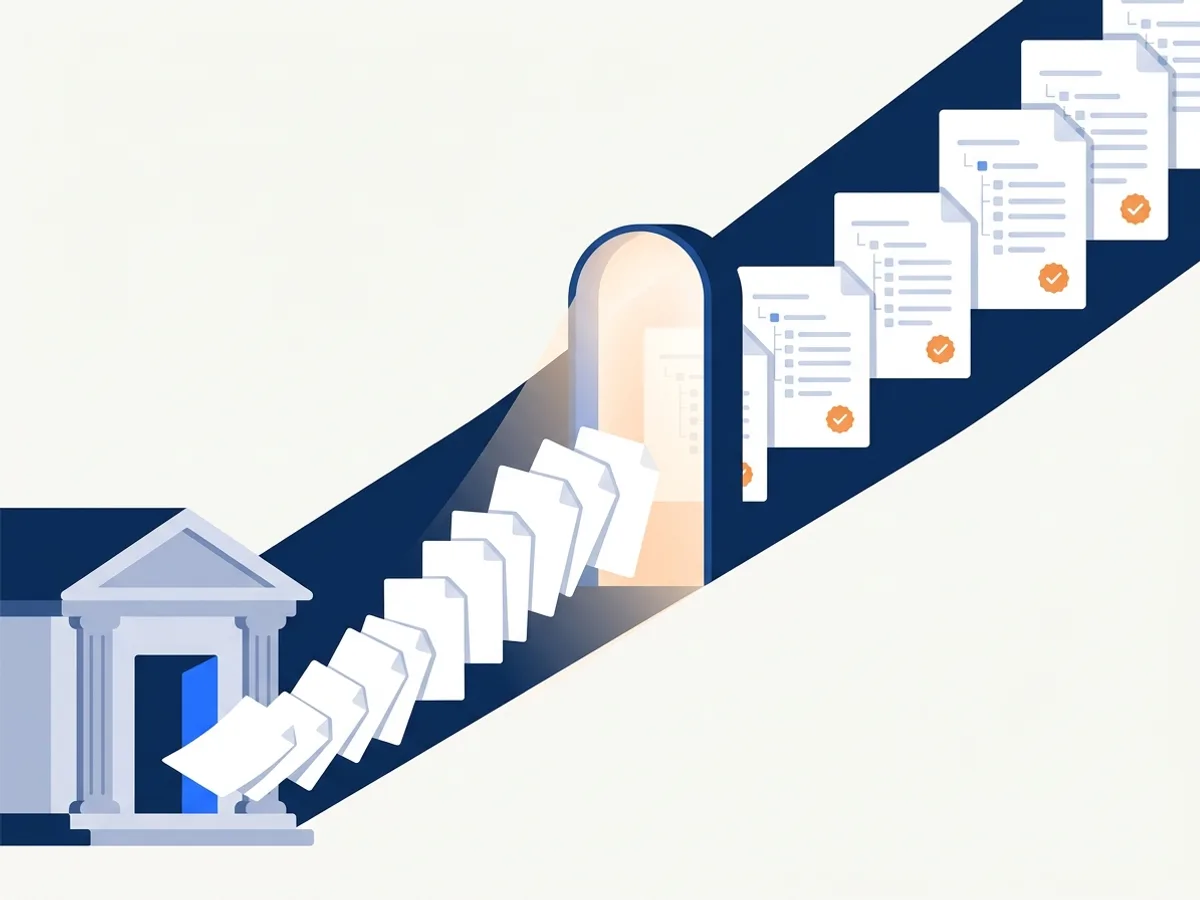
DocoMatic finds the PDFs on your website, fixes them for people who use screen readers, and checks every file before you get it back.
The backlog
Public bodies post thousands of PDFs online: agendas, budgets, forms and minutes.
Many of those files have no hidden structure, so a blind person using a screen reader can't find their way through them.
A US rule, ADA Title II, says those files must be usable by people with disabilities. The deadlines are fixed:
When the Department of Justice set those dates, it wrote:Advanced technology, such as generative AI, does not yet reliably automate the remediation of inaccessible content at scale(91 FR 20902, at 20907)(opens in new tab).
So the backlog is large, the dates are set, and software alone can't do all of it. We built DocoMatic to do the part that software does well, and to show you the result for every file.
Canadian public bodies use DocoMatic too, in English or French.
Counted from the day this page was generated. Source: 91 FR 20902.
Find → fix → prove
DocoMatic does three things, in order.
It scans your website, finds the PDFs linked from your pages and sitemaps, and reports which ones fail and why. This part is free.
It makes a new, corrected copy of each PDF with the hidden structure a screen reader needs:
Your original file isn't changed. You publish the fixed copy in its place.
Every fixed file is machine-checked. From Level 2 up, that includes veraPDF. You get a verification report as evidence, and if a file fails its check, you aren't charged for it.
You pay in credits per page. Harder pages cost more.
Human review is optional. It adds 10 credits per page at any level: turn it on when you request a fix, or arrange it with our team. Level 3 includes a reviewer spot-check.
Plans start at $299.00 per month, and every price is published.
Advice is not a fixed file
General AI chat tools are useful. They can explain an accessibility problem or suggest alt text. But fixing a whole website of PDFs needs four more things.
An accessible PDF has a hidden structure inside the file: tags, reading order, table header cells, embedded fonts, and parts marked as decoration. A chat tool can describe what's wrong, but it doesn't reliably rebuild that structure. That is the gap the Department of Justice described.
A district can have thousands of files, with more added every week. Fixing them one conversation at a time isn't realistic.
You may need to show that your files pass. We run an independent checker and give you a report. A chat answer isn't evidence.
Public bodies buy from a vendor who signs a data agreement, accepts purchase orders and can be held responsible.
We are also plain about what software can't do yet. Low-confidence items, such as machine-written image descriptions, are flagged in each report. Human review is there for the files that need a person.
Checked, published, easy to buy
| What we do | Why it matters to you |
|---|---|
| Proof, not promises: every file is checked, and you aren't charged if it fails | You get evidence, not a claim |
| Published prices | You don't have to call for a quote to find out what it costs |
| A free website scan and public deadline pages | You can see the size of the problem before you talk to anyone |
| Buying paperwork ready: a data processing agreement with student-records (FERPA) terms, security questionnaire answers on request, a W-9, purchase orders and ACH payment | Fewer blockers for your finance and IT offices |
| Ongoing monitoring for new PDFs | New files don't quietly fall out of compliance |
| Plain limits: low-confidence items are flagged in every report | You know which files may need a person |
In short: checked results, published prices, and easy buying for public bodies.
Mostly self-serve
It's mostly self-serve, with one human step.
No training is needed for the basic flow: upload, fix, download.
We check that each new account belongs to a real public body before the trial credits unlock. Sign-ups from recognized government and education email addresses are usually approved right away. Other sign-ups are checked by a person, who replies within one business day. This keeps out abuse and fake accounts.
Card payment opens with our billing launch. Today, plans and credits are arranged by quote and paid by purchase order. Invoices are paid by ACH only; we don't take checks or wire transfers. A W-9 is available on request, and we accept tax-exempt certificates. We don't hold a cooperative purchasing contract yet.
The company and the founder
DocoMatic is operated by Monocubed, Inc., a Delaware company.
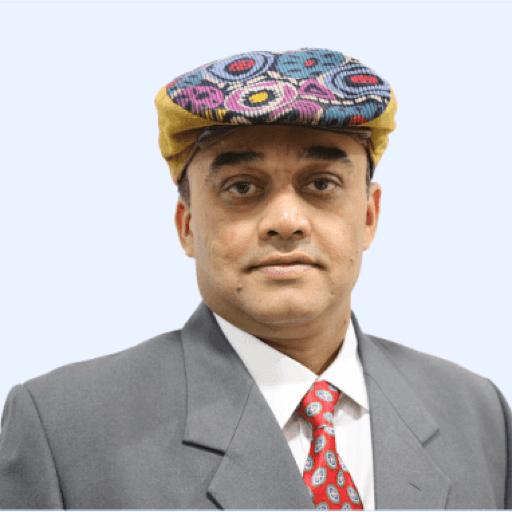
Rakesh Patel
CEO and founder of DocoMatic and Space-O Technologies
Rakesh Patel has 32 years of leadership experience, founded Space-O Technologies in 2010, and has overseen more than 3,000 software projects.
DocoMatic means document plus automatic. Software does the repetitive work, and every file comes back with a report.
A company that sells accessibility has to be accessible. This site targets WCAG 2.1 AA, and our accessibility statement lists known issues in public. We link to the primary source for rules and dates. If a claim here goes further than we can show, tell us and we'll source it or take it down.
Start with a count
Start with a free scan of your website. When you're ready, start the trial.
100 free trial credits, enough for up to 100 pages at Level 1. You are not charged for a file that fails verification.