Accessible documents for AODA and the Accessible Canada Act
AODA web accessibility requirements in force since January 1, 2021
Ontario organizations file accessibility compliance reports under AODA; federally regulated organizations publish accessibility plans and progress reports under the Accessible Canada Act. In both regimes, the documents you publish are the evidence.
DocoMatic remediates them in English and in French, with per-document language tagging and a verification report on every file.
Born-digital documents in both languages; OCR for scans is English-only today.
Free scan, no account. Trial: 100 credits, 14 days, up to 10 documents, no card.
AODA
Ontario
- WCAG 2.0 AA, in force since January 1, 2021
- Compliance reports every two or three years
Accessible Canada Act
Federally regulated
- Accessibility plans, feedback, progress reports
- Dated web and document duties from December 5, 2027
Two regimes, one document problem
AODA and the Accessible Canada Act run in parallel, and many organizations answer to both. ADA Title II does not apply in Canada.
Ontario's Accessibility for Ontarians with Disabilities Act(opens in new tab) (AODA) requires designated public-sector organizations and businesses or non-profits with 50 or more employees to make their websites and web content — posted documents included — conform to WCAG 2.0 Level AA, in force since January 1, 2021. Two numbers, two duties: the obligation to file an accessibility compliance report(opens in new tab) reaches further down — 20 or more employees for businesses and non-profits, every three years; every two years for designated public-sector organizations. A small organization can owe a filing without owing full WCAG conformance.
The Accessible Canada Act(opens in new tab) covers federally regulated organizations — banking, telecommunications, transportation and the federal public sector — and requires published accessibility plans, feedback processes and progress reports toward a barrier-free Canada by 2040. The plans and reports must themselves be accessible. Regulations registered December 5, 2025 (SOR/2025-255(opens in new tab)) add dated duties for the federal public sector: web pages created or updated from December 5, 2027, and documents made available for download from December 5, 2028, must meet CAN/ASC-EN 301 549:2024, to the extent feasible.
Duties, and when they apply
| Regime | Duty | When |
|---|---|---|
| AODA | WCAG 2.0 AA for websites and web content, posted documents included | In force since January 1, 2021 |
| AODA | Accessibility compliance report — designated public-sector organizations | Every two years |
| AODA | Accessibility compliance report — businesses and non-profits with 20 or more employees | Every three years |
| ACA | Published accessibility plan, feedback process and progress reports, themselves accessible | Ongoing cycle |
| ACA regulations (SOR/2025-255) | Web pages created or updated from this date meet CAN/ASC-EN 301 549:2024 — federal public sector | From December 5, 2027 |
| ACA regulations (SOR/2025-255) | Documents made available for download from this date meet CAN/ASC-EN 301 549:2024 — federal public sector | From December 5, 2028 |
Federally regulated private-sector organizations follow later, by employee count; the regulation sets the thresholds. Heritage and user-generated content are exempt.
Not a Canadian organization? See solutions by organization type.
Which standard, and which version
| Regime | Standard named | What we remediate to |
|---|---|---|
| AODA | WCAG 2.0 Level AA | WCAG 2.1 Level AA + PDF/UA |
| ACA regulations (SOR/2025-255) | CAN/ASC-EN 301 549:2024 | WCAG 2.1 Level AA + PDF/UA |
WCAG 2.1 includes everything in 2.0, so a file that meets our threshold meets the AODA requirement; we remediate to the newer version because it is stricter, not because the rule asks for it. CAN/ASC-EN 301 549:2024 adopts EN 301 549:2021, which is built on WCAG 2.1.
PDF/UA-1 is the file-format test — what WCAG means inside a PDF — validated by veraPDF, an independent open-source validator.
What is carved out
AODA: success criteria 1.2.4 (live captions) and 1.2.5 (pre-recorded audio description) are excluded; the requirement applies to web content published after January 1, 2012.
SOR/2025-255: heritage and user-generated content are exempt, and the duty is to conform to the extent feasible, with alternative measures where non-conformity creates a barrier.
Quebec has its own standard for public bodies (SGQRI 008)(opens in new tab), which covers downloadable documents.
Sources
Every regulatory claim on this page is cited to one of these primary sources.
- Ontario.ca: How to make websites accessible (AODA)
- Ontario.ca: Completing your accessibility compliance report (AODA)
- Ontario.ca — Integrated Accessibility Standards Regulation, O. Reg. 191/11
- Accessible Canada Act, Justice Laws Website
- Canada Gazette, Part II — Regulations Amending the Accessible Canada Regulations, SOR/2025-255, registered December 5, 2025
- Accessibility Standards Canada — CAN/ASC-EN 301 549:2024, Accessibility requirements for ICT products and services
- Québec.ca — Standard sur l'accessibilité des sites Web (SGQRI 008)
- W3C — Web Content Accessibility Guidelines (WCAG) 2.0
The documents Canadian organizations publish
From compliance filings to everyday forms, bilingual by nature.
AODA compliance evidence
The inventory and per-file verification reports that stand behind your accessibility compliance report.
ACA plans and progress reports
Published plans and reports that must themselves be accessible — in both official languages.
Public forms
Fillable forms with labeled fields and logical tab order, in matching English and French versions. Forms run at Level 3.
Reports and publications
Annual reports, guides and notices with correct structure, reading order and alt text.
Bilingual document pairs
Matched EN and FR files, each with its own language tag and its own report. How we work in both languages.
Working in both official languages
Each file's primary language is written into its metadata as a BCP 47 tag — English, French and Spanish detected from the text, any other language set in review. Without it, a screen reader reads French text with an English voice: not a partial failure but a total one.
What works today
- Born-digital PDFs in French and English — the full pipeline, the language tag and a verification report on every file.
- Matched EN/FR pairs — remediated and verified separately, each with its own report.
What does not work today
- OCR is English-only. A scanned French document cannot have its text layer rebuilt, so it cannot be tagged at all. If much of your French archive is scans, tell us before you buy.
- One language per file. Passages in a second language are not tagged at the element level.
- French alt text is drafted, not judged. We do not yet verify non-English alt text.
How it works, and what a filing actually needs
| Step | What happens | What your filing gets |
|---|---|---|
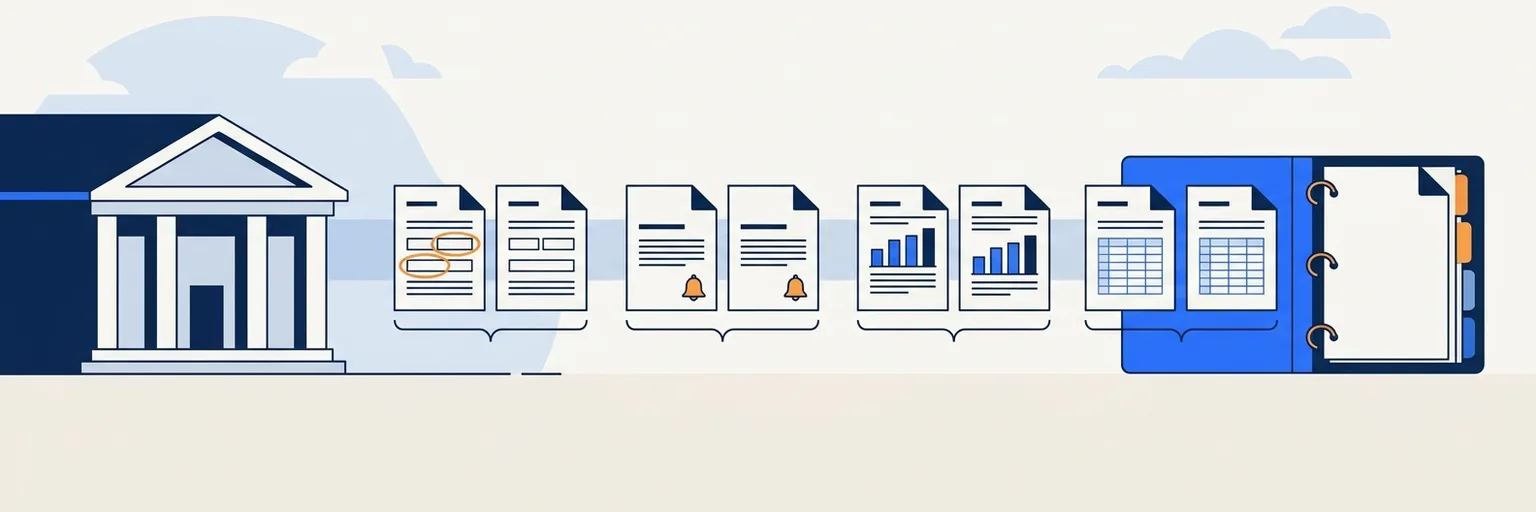
| 1Connect your domains | We crawl your public sites — English and French — and inventory every posted document. We read public pages and never write to your site. | A count. How many documents you publish — most organizations have never counted. Scan free. |
| 2Remediate in both languages | Documents are remediated to WCAG 2.1 AA and PDF/UA with per-document language tagging, at the level you chose. | A failing share. What proportion would fail machine checks — a baseline, not an intention. |
| 3Your accessibility lead approves | Flagged files go to human review, and your accessibility lead sees a record of what changed. | Evidence per document. A dated verification report for every file remediated. |
| 4Evidence for your filings | Per-file verification reports and inventories that back your AODA compliance report or ACA progress report. | A trend. The same count next cycle, moving the right way — which is what a progress report is. |
Your backlog, and pricing for Canadian organizations
See your bilingual backlog
Our entity registry currently covers US organizations, so there is no Canadian lookup yet. The free scan works on any public domain: run it on your own site for the document count and failing share in minutes, in both languages — the scan inventories what you publish regardless of language.
Pricing for Canadian organizations
A one-time backlog pack plus a Growth or Scale plan fits most organizations; the price list is the same for every customer, and the cost calculator takes bilingual volumes.
- Billing is in USD today — we do not offer CAD billing. Your finance team converts at its own rate.
- Purchase orders with net-30 to net-60 invoicing, paid by ACH. Card payment opens with our billing launch.
- Invoicing a Canadian entity by another route, and GST/HST: ask us before you raise a purchase order, and we will say plainly what we can and cannot do today.
- You are not charged for a document that fails verification.
Canadian compliance questions
Who must meet AODA web accessibility requirements?
Designated public-sector organizations and businesses or non-profits with 50 or more employees in Ontario: their websites and web content, documents included, must conform to WCAG 2.0 Level AA, in force since January 1, 2021. Confirm your category with counsel.
What does the Accessible Canada Act require for documents?
Federally regulated organizations must publish accessibility plans, progress reports and feedback processes, and the documents must themselves be accessible. SOR/2025-255 adds dated duties for the federal public sector: web pages from December 5, 2027, downloadable documents from December 5, 2028.
What about Quebec?
Quebec's Standard sur l'accessibilité des sites Web (SGQRI 008) applies to public bodies, separately from AODA and the ACA, and covers downloadable documents. DocoMatic remediates French documents with per-document language tagging; for your obligations under it, consult counsel.
Is French remediation as good as English?
For born-digital documents, yes: the same pipeline, the same checks, the same report, plus the language tag. For scans, no — OCR is English-only today. French alt text is drafted, not judged, so add human review where wording matters.
How is pricing handled in Canada?
Per-page credit pricing identical to US plans, billed in USD; we do not offer CAD billing today. Orders are paid by purchase order and ACH invoice. Ask us about invoicing a Canadian entity and GST/HST before you raise a purchase order.
Which WCAG version do we need — 2.0 or 2.1?
AODA names WCAG 2.0 Level AA; the ACA regulations name CAN/ASC-EN 301 549:2024, which is built on WCAG 2.1. WCAG 2.1 includes everything in 2.0, so a file remediated to 2.1 AA and PDF/UA meets both.
We have 30 employees. Do we have to conform, or just file?
In Ontario, the WCAG website requirement starts at 50 employees; the compliance report starts at 20 for businesses and non-profits, every three years. At 30 you file without owing full conformance, though accessible formats on request still apply. Confirm with counsel.
Do you have French-language reviewers?
Human review is done by our own accessibility team, and a reviewer changes structure and description, never your wording. We do not yet verify non-English alt text, so a review of a French document covers tags, reading order, labels and the language setting, not whether the French alt text says the right thing. Tell us if you need that.
Can you handle scanned French documents?
Not today: OCR is English-only, so a scanned French document cannot have its text layer rebuilt. Send born-digital PDFs where you have them, and tell us how much of your French archive is scans.
Make the documents match the filings
Start with 100 free credits — enough for about 100 simple pages or 25 complex ones, across up to 10 documents in 14 days. Or scan your domains first and see the bilingual backlog before you commit to anything.