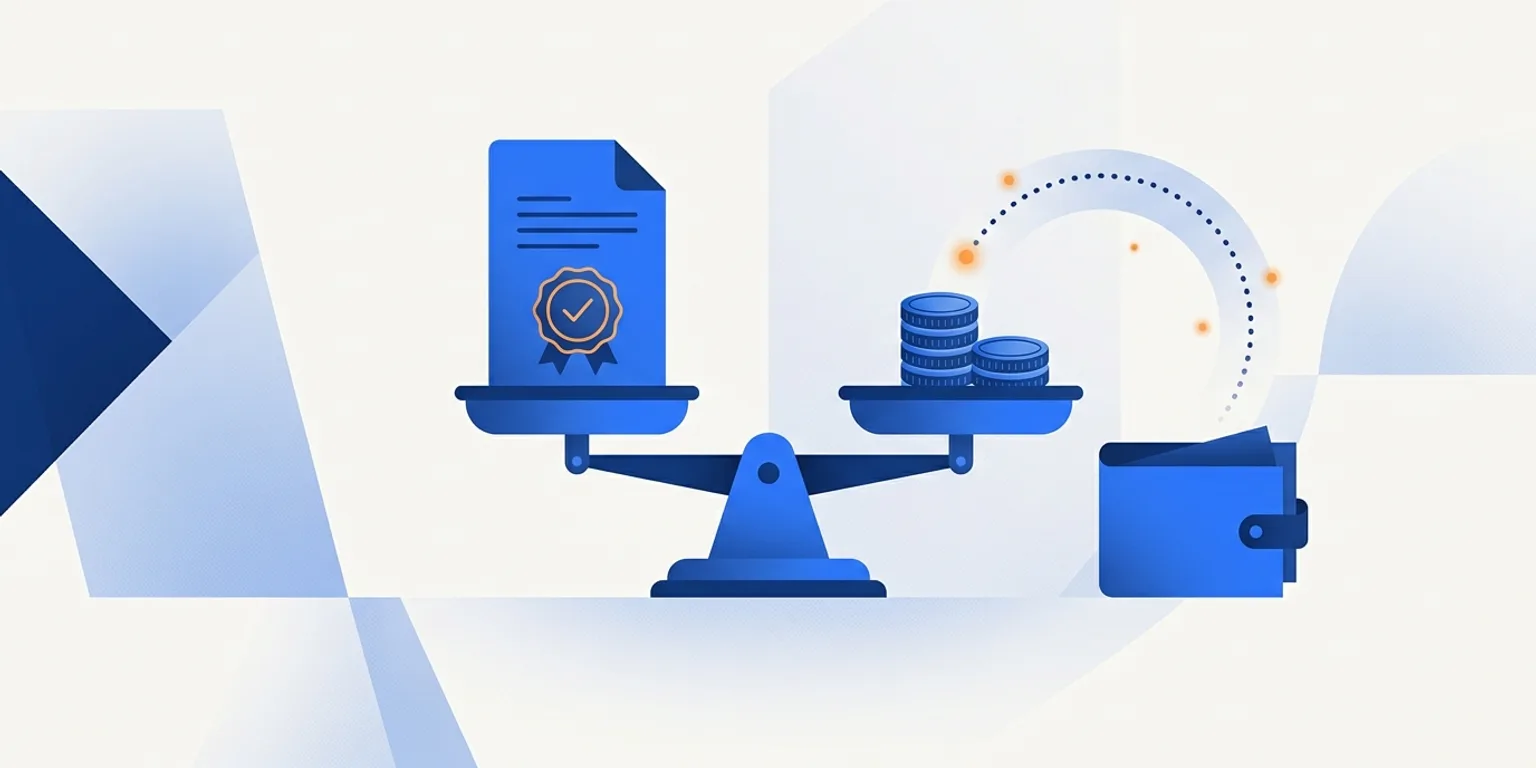
Most remediation billing works like a taxi meter: the work happened, so you pay, whatever the output looks like. DocoMatic bills on a different rule — credits are reserved when a job starts and only consumed when the document verifies — and this post explains the model in plain words, because billing you can predict is a feature, especially on a public budget.
How does DocoMatic billing actually work?
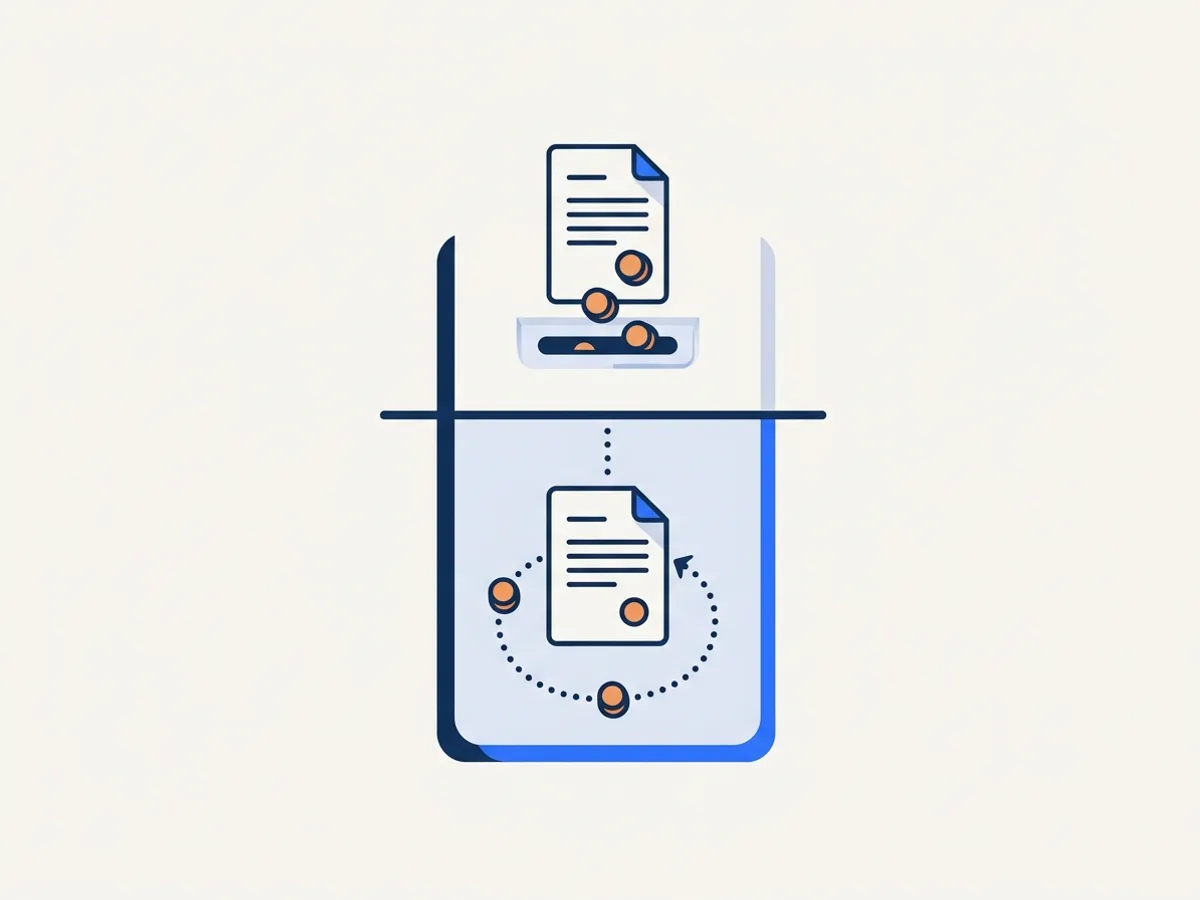
When you start a remediation job, the credits for it are reserved from your balance — not charged. They are consumed only when the document passes its service level's published verification threshold. If verification fails, the reservation is released back to your balance automatically: no ticket, no request, no waiting. If a job gets stuck, the reservation expires after 24 hours and is released.
Credits themselves are simple: one credit is one Level 1 page, a Level 2 page is four, a Level 3 page is thirty, matching how much work each level actually involves. Plans and pack pricing are on the pricing page.
What counts as "verified"?
Each level has a published threshold, and the thresholds are the contract. At Level 1, all machine checks must pass — tag tree, document title, language, no untagged content. At Level 2, the document must score 95 or higher on our 0–100 analyzer scale and pass veraPDF PDF/UA-1 validation with zero failures. At Level 3, the same thresholds apply to more complex documents, including forms and scanned pages. Below the threshold for the level you chose, you pay nothing.
The full policy — the whole policy, with no separate fine print — is on the guarantee page.
What happens after a below-threshold result?
You choose, and the choices are priced fairly. You can re-run the document free; within 30 days, re-running the same document version at the same or a lower level is always free. You can move up a level — a document that was more complex than it looked — and pay only the credit difference between the two levels. Or you can ask us about human review for the judgment calls automation flagged; today that is arranged with our team rather than bought in the product.
Two more rules exist to keep the meter honest. Byte-identical re-uploads within your organization are detected automatically and reuse the existing result at no cost — you never pay twice because two departments uploaded the same file. And after 30 days, a re-run at the same level costs 25% of the original price rather than full price.
Why bill this way?
Because it points our incentives at your outcome. A vendor paid for effort profits from documents that take many attempts; a vendor paid only for verified output profits from a pipeline that passes on the first try. Every below-threshold release is our cost, not yours, which makes verification quality a revenue question inside our own building — the strongest kind of incentive there is.
It also fits how public money works. Budget holders need to know that 10,000 credits produce 10,000 credits' worth of verified pages, not 10,000 credits' worth of attempts. A reservation model turns remediation from an open-ended services engagement into a priced outcome you can put in a budget memo.
Compare that with the quote-per-project model most manual services use: an estimate up front, change orders when documents turn out harder than sampled, and an invoice that reconciles to hours rather than outcomes. None of that is dishonest — it is just how effort-based pricing has to work. Outcome-based pricing removes the reconciliation problem entirely: the unit you budget is the unit you receive, and the unit is verified.
Where do refunds fit?
Mostly, they don't need to — automatic release below threshold removes the usual reason to ask. Beyond that: monetary refunds are requested from a paid invoice on your billing page and handled case by case by support — within 7 days of a first purchase if the credits are unused, and for platform faults on their merits. If you think a document was charged that should not have been, dispute the charge from inside the product: open the document, go to its History tab and choose "Dispute this charge" on the version you were charged for. You have 30 days from the charge, and raising a dispute needs the Billing role. A person reads it and decides — not an algorithm — and if the dispute is upheld, the credits for that version return to your balance. The Disputes tab of your billing page keeps the record — what was disputed, the decision and the reviewer's note, the credits returned — and is where a dispute can be withdrawn. An upheld dispute also logs the failure to our defect corpus. What is still not built is the automated loop that turns that entry into a regression check the pipeline runs on every release; today a person does that step. Outside the 30-day window, or for anything a dispute does not cover, email support@docomatic.ai with the document and we will look at it.
Every release, refund and credit return is logged with a reason, and support can give you that record on request. The principle underneath all of it is the same one on the guarantee page: if it doesn't verify, you don't pay.
Topicspricingcreditsguaranteebilling
About the author
Rakesh Patel — CEO & Founder
Rakesh Patel is the founder and CEO of DocoMatic and the founder of Space-O Technologies (2010), the engineering company behind it. He brings 32 years of leadership experience in business strategy, operations and IT, and has overseen the delivery of more than 3,000 software projects. DocoMatic applies that delivery experience to one specific problem: making public documents accessible, verifiably.